



Shift Left on Cost

Control Cloud & AI Costs Where They Start: In Code

Frugal connects cloud spend to the code that drives it, giving engineers cost visibility and optimization recommendations as they build.

Frugal works with
CLOUD WASTE
200
+

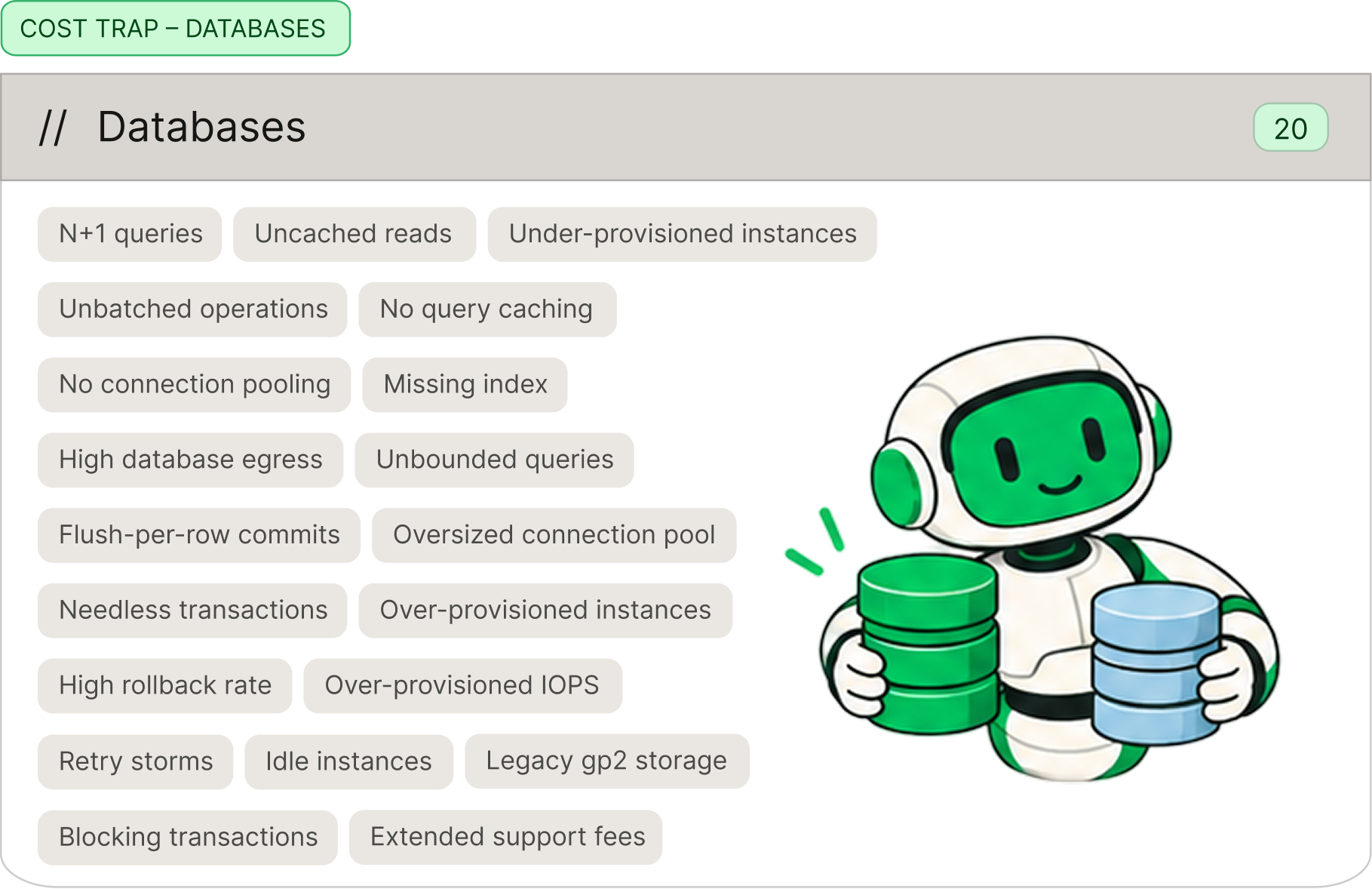
Types Of Cloud Waste, Found In Your Code

Some waste lives in IaC configuration, more waste lives in application code.

CLOUD WASTE
200
+

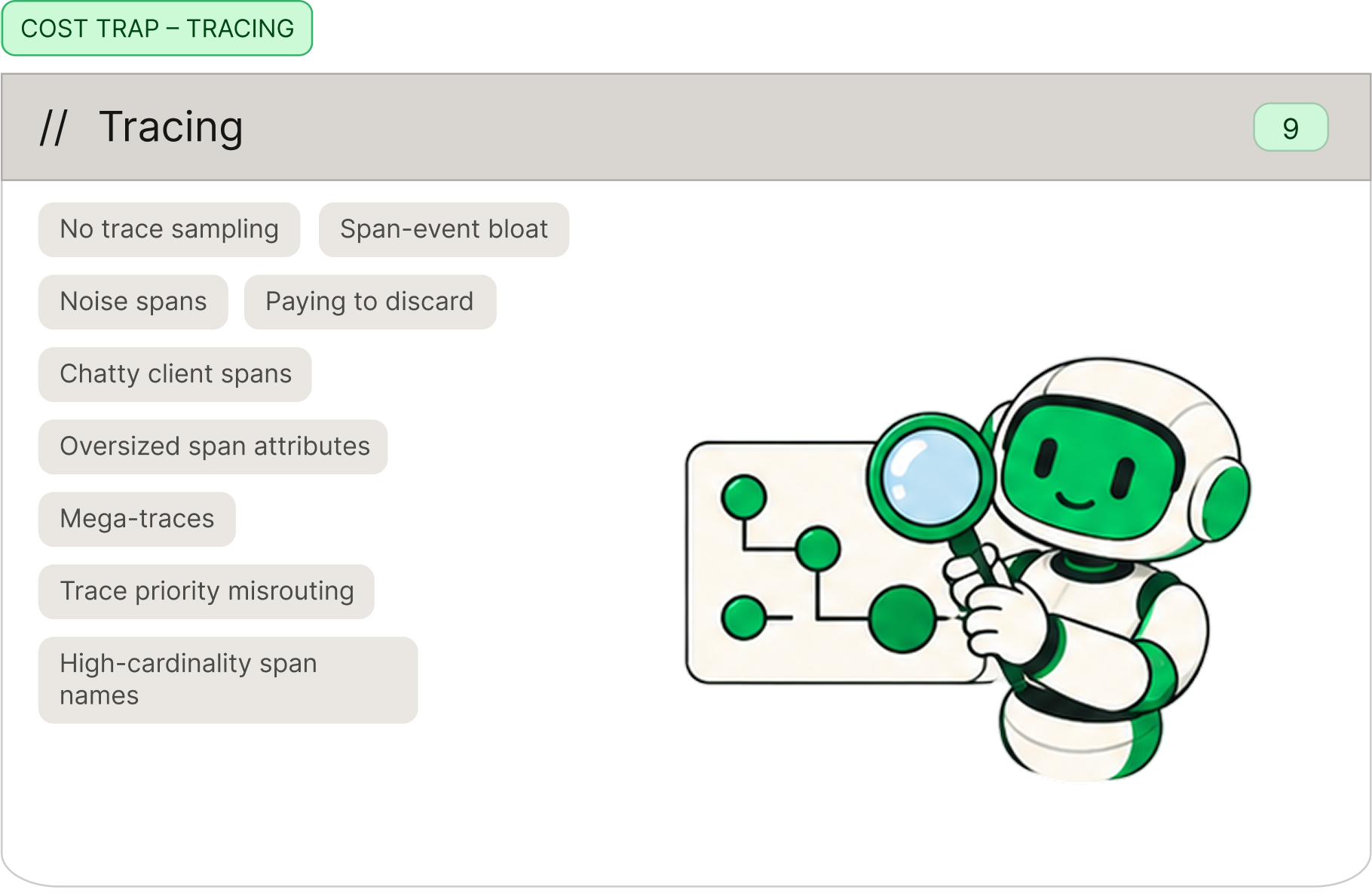
Types Of Cloud Waste, Found In Your Code

Some waste lives in IaC configuration, more waste lives in application code.

CLOUD WASTE
200
+

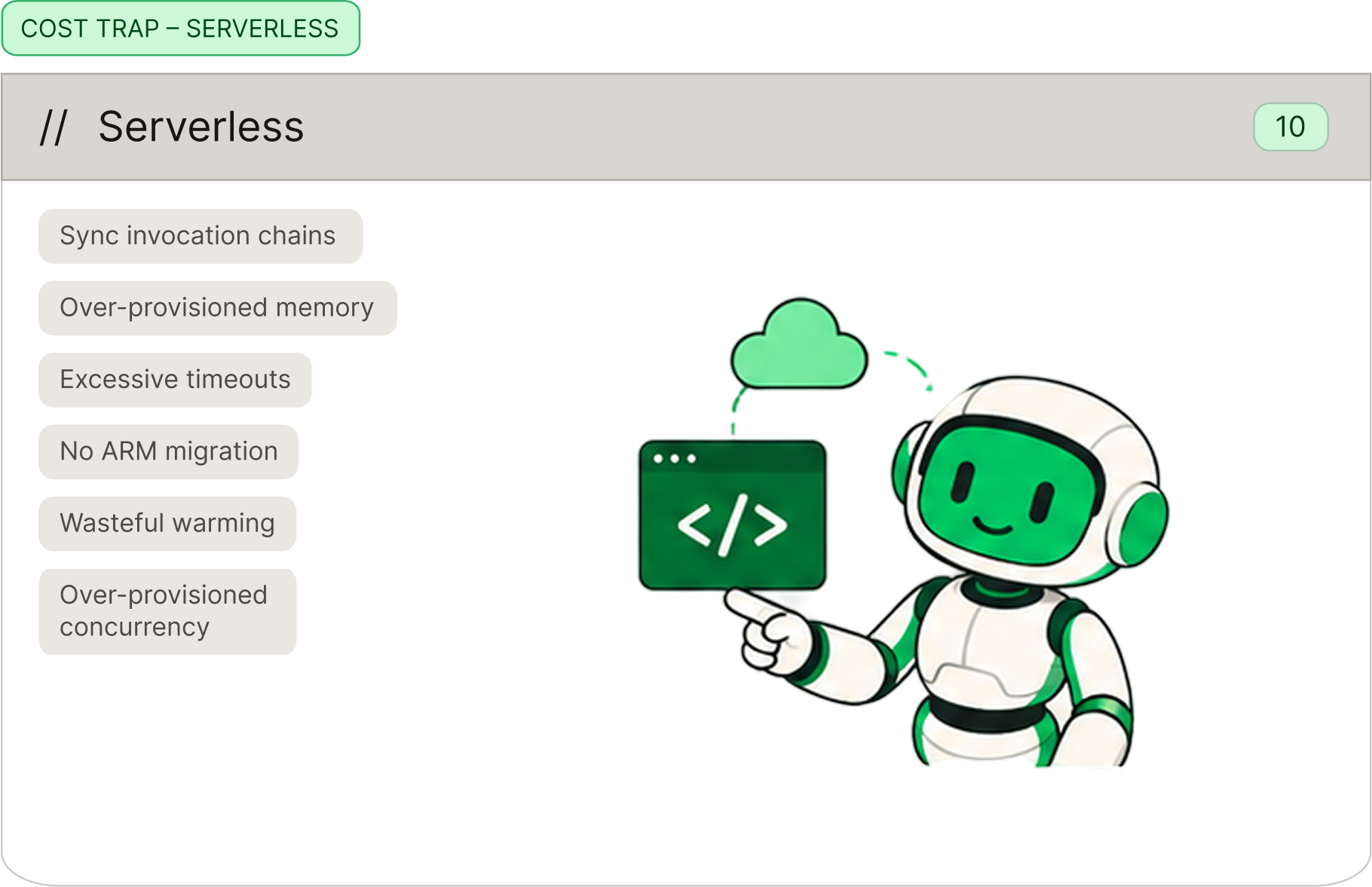
Types Of Cloud Waste, Found In Your Code

Some waste lives in IaC configuration, more waste lives in application code.

CLOUD WASTE
200
+

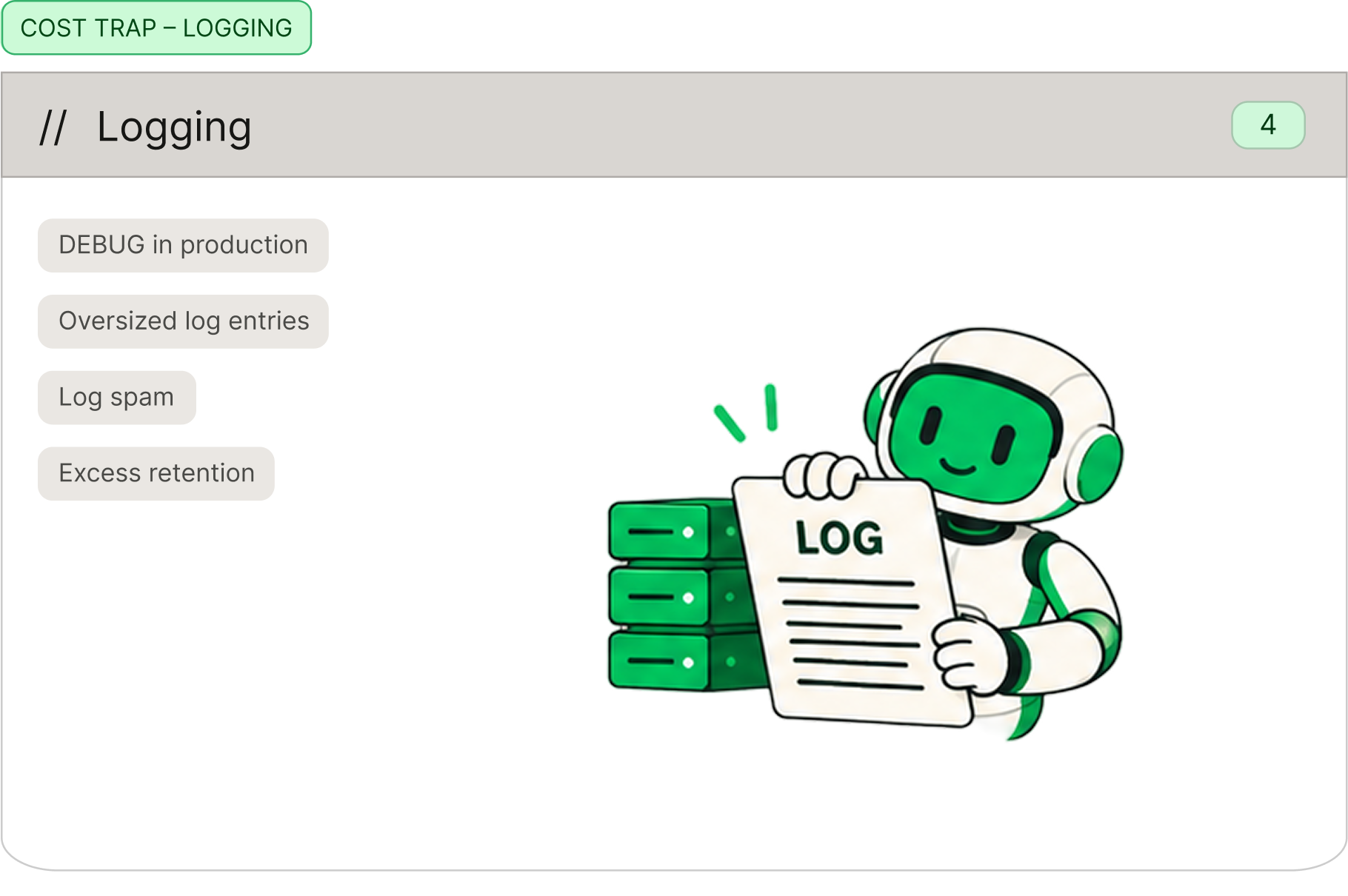
Types Of Cloud Waste, Found In Your Code

Some waste lives in IaC configuration, more waste lives in application code.

CLOUD WASTE
200
+

Types Of Cloud Waste, Found In Your Code

Some waste lives in IaC configuration, more waste lives in application code.

CLOUD WASTE
200
+

Types Of Cloud Waste, Found In Your Code

Some waste lives in IaC configuration, more waste lives in application code.

CLOUD WASTE
200
+

Types Of Cloud Waste, Found In Your Code

Some waste lives in IaC configuration, more waste lives in application code.

CLOUD WASTE
200
+

Types Of Cloud Waste, Found In Your Code

Some waste lives in IaC configuration, more waste lives in application code.

Built for the Teams That Own Cloud Cost

Engineering teams need cost visibility they can act on. Frugal gives them the attribution, context, and tools to understand, prevent, and reduce cloud and AI spend.

Prevention

Catch cost regressions before they ship

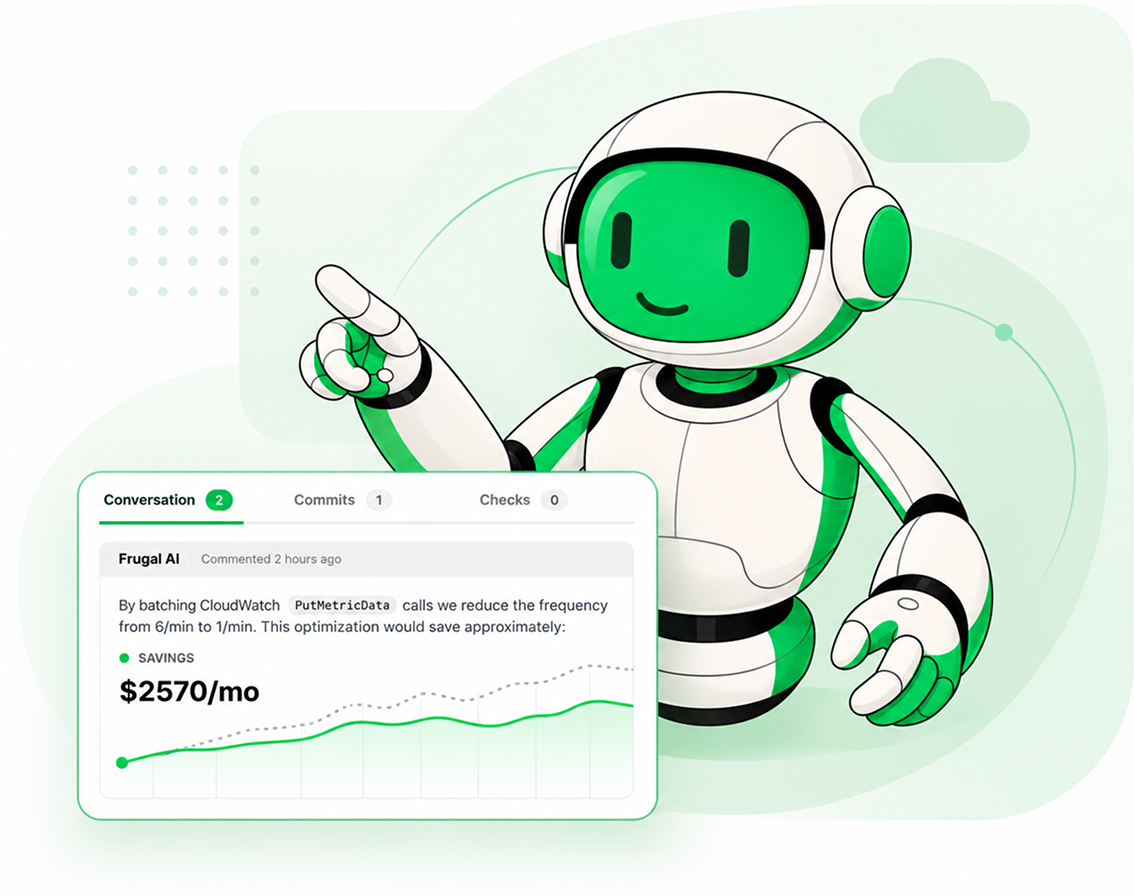
Frugal surfaces the expected cost impact of code changes during development & review.

Optimization

Review Code for Over 180 types of hidden waste

Frugal prices the opportunity, prepares the fix and keeps the engineering costs in control.

Attribution

Find the 20% of code driving 80% of costs

Frugal connects shared cloud costs to the code and application behavior driving them.

Full SDLC Coverage:
From Commit to Production

Visibility belongs in the developer workflow, not just the monthly invoice. Frugal acts as a
guardrail at every stage of the lifecycle.

Coding Agent

Move from reactive to proactive
Turn cost into an architectural decision made during design-time, rather than a surprise discovered in production.

PR Review

Eliminate billing surprises
Catch expensive regressions during the review process, ensuring they never merge into your main branch.

Continuous Monitoring

Close the loop
‍
Use production usage evidence to optimize applications for over 180 different kinds of waste.
Free Audit

Start With a Free Audit

Frugal will conduct a full assessment of your application and show you where the waste is buried. As a bonus, we'll review your current process for shift left best practices and provide a plan for keeping cost regressions out of your codebase going forward. One app, real numbers, no strings.
What you get
  • Cost attribution down to the exact function, log, or query driving spend
  • Your top 5 highest impact fixes, checked against 180+ known waste patterns
  • A look back at your last 200 PRs, what would've been caught at review
  • A shift left plan that fits your CI/CD without slowing engineering down
Book A Free Audit

Frequently Asked Questions

Got more questions? Ask us
frugal coin

What Makes Frugal Different?

Traditional FinOps tools are reactive. They’re good at telling you what you spent but do not explain why or how to fix it. Frugal proactively provides engineers with visibility and optimization recommendations before you ship.

Frugal also goes deeper into code, looking for hidden waste that cannot be found in configuration alone. Finally, Frugal doesn’t just point out waste, it fixes the code and can automatically produce ship ready PRs.

What Types of Costs Can Frugal Optimize?

Frugal works across all coding languages and cloud platforms such as AWS, GCP, Azure and major third-party platforms, including:

Storage – S3, Azure Blob, Google Cloud Storage

Logs & Metrics – CloudWatch, Azure Monitor, Datadog, Coralogix

AI – OpenAI, Anthropic direct or via AWS, GCP and Azure

Serverless – Lambda, Azure Functions, Cloud Functions

Databases – Aurora, DynamoDB, Azure SQL, Spanner, BigQuery,

Kubernetes – Amazon EKS, Google Kubernetes Engine (GKE)

What Are Examples of Optimizations?

Frugal has two approaches to optimization - manual and automated. For manual optimization, we point engineers at the components, call sites and queries driving the highest spend. Using this data, engineers can manually rearchitect the most impactful code or features.

For automated optimization, Frugal reviews code and cloud configuration for over 180 different types of waste across all your costs including: AI, storage, logs, metrics, traces, serverless, databases and Kubernetes.

We find waste and produces code fixes for issues such as:

Rebalancing API costs to storage costs

Rightsizing high-cost/low-value logs and metrics

Reducing AI token consumption with prompt caching and structured outputs

Applying caching and batching to offload frequent, costly usage

Rightsizing Lambda functions or Kubernetes pods.

We also address best practices—tagging untracked costs, assigning clear code ownership, and ensuring cost visibility.

How Does Frugal Work?

Frugal’s inputs are code, cost and observability data. Its outputs are cost attribution reports and optimization recommendations. Cost attribution breaks down shared costs and maps spending to components, call sites and queries that are driving the spend. This data points engineers to the places in the code where optimization would have the most cost benefit. Frugal Fixes are automated optimization recommendations where Frugal identified waste, fixed it and provide you with the savings amount and code patch.

How Does Frugal Protect the Security of My Data?

Frugal is built with a security-first architecture:

Read-only access to your source code, observability data, and billing data—no changes are made without your review. We do not need access to your customer data.

Data encryption in transit (TLS 1.2+) and at rest (AES-256).

Least privilege access — we request only the permissions needed to perform analysis.

No data sharing—your code and cost data are never shared with third parties or used to train AI models.

Private deployment option — for high-security environments, Frugal can run entirely inside your cloud with zero data leaving your environment.

The Frugal team has decades of experience building high-security, enterprise focused solutions. We also follow industry best practices for cloud security. We are SOC2 type 2 audited and certified.

Take Frugal for a live test drive

Explore how Frugal scans your code and cloud services to find waste, recommend optimizations, and generate ready-to-use fixes in a secure, read-only environment.